
In general, I do not enjoy card-based/deck building games. I don’t enjoy the random pack luck or trying to determine what to play or how to build the best team. However, when a game has a whimsical name like Abra-Cooking-Dabra and features an adorable cat in their marketing, I had to see what the team at Door 407 had up their sleeves.
If I had to describe Abra-Cooking-Dabra it would be a cross between Overcooked and Solitaire, maybe? You are running a British restaurant that resembles a seedy gambling parlour for some reason, and there is a cat that just hangs out in the corner of the table. Now, since we have a ‘Wonderland’ sort of vibe here, the cat is presumably a nod to the Cheshire Cat.
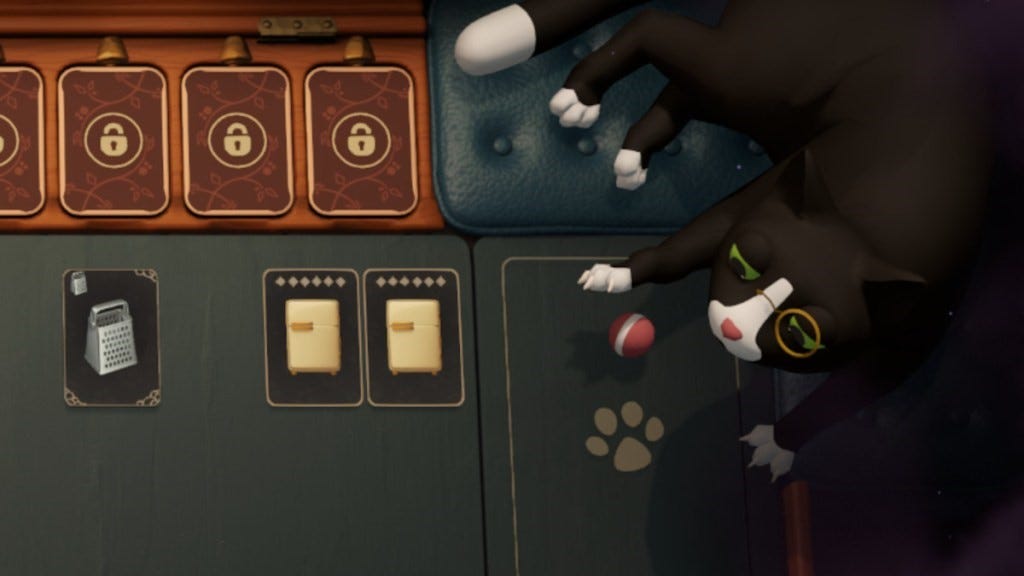
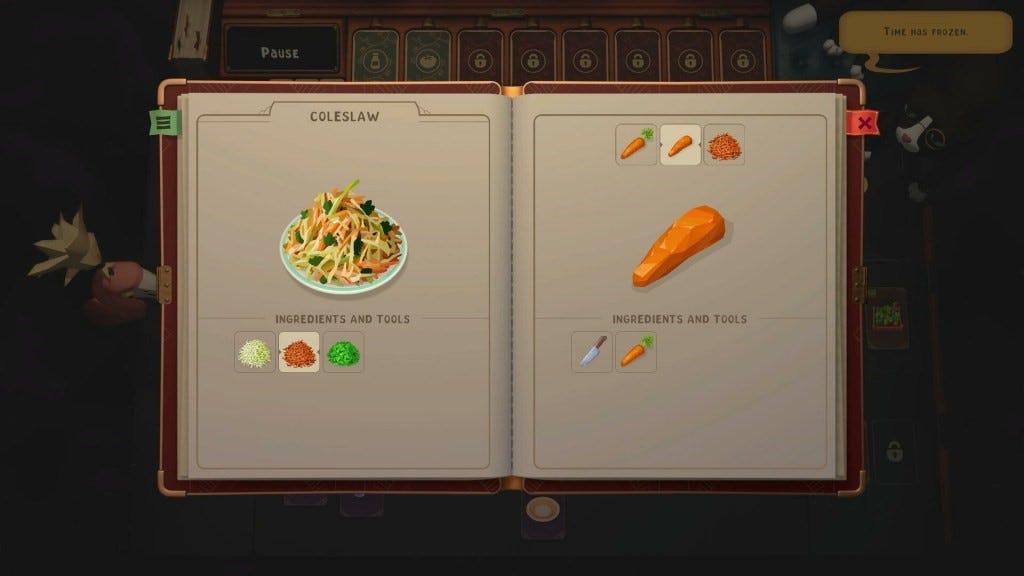
You have a small selection of cards at the start of your level, a mixture of appliances (stove and sink), gadgets, cookware (pots, pans, and casserole dishes), dishware (plates and sauce boats), ingredients and money. Customers sit down and order their item. Here I will talk about your best friend, the pause button. While you can speed up the game, you want to pause it while doing all your organizing/prep because you have a finite amount of time to complete all the dishes. Feel free to organize your workspace as needed, but I found grouping items together worked best for me. If you have any dirty dishes, stack them at the sink. If you have any plants that need to be grown for the dish required, pop them onto the garden plot card. Look at the menu item requested and determine what needs to be done, Do you need to peel, slice, chop, grate, boil, mash, etc.? I pass on the knife will peel or slice depending on the veg, multiple passes on the knife and you will end up with dicing. A knife will also open and tin cans you have. None of your actions will progress until the game is no longer paused, so once your plan is made, it’s go time. Menu orders may require multiple steps, especially in later round, and can combine different preparation techniques including cold and hot items combined. For example, one of the first recipes you learn is for coleslaw. Place the carrot on the knife to peel it, then on the grater to grate it, grate your cabbage and slice your parsley. Combine these three items on a clean plate to create coleslaw. If you mess up one of your ingredients, it won’t let you combine them, but you will lose a lot of time this way.
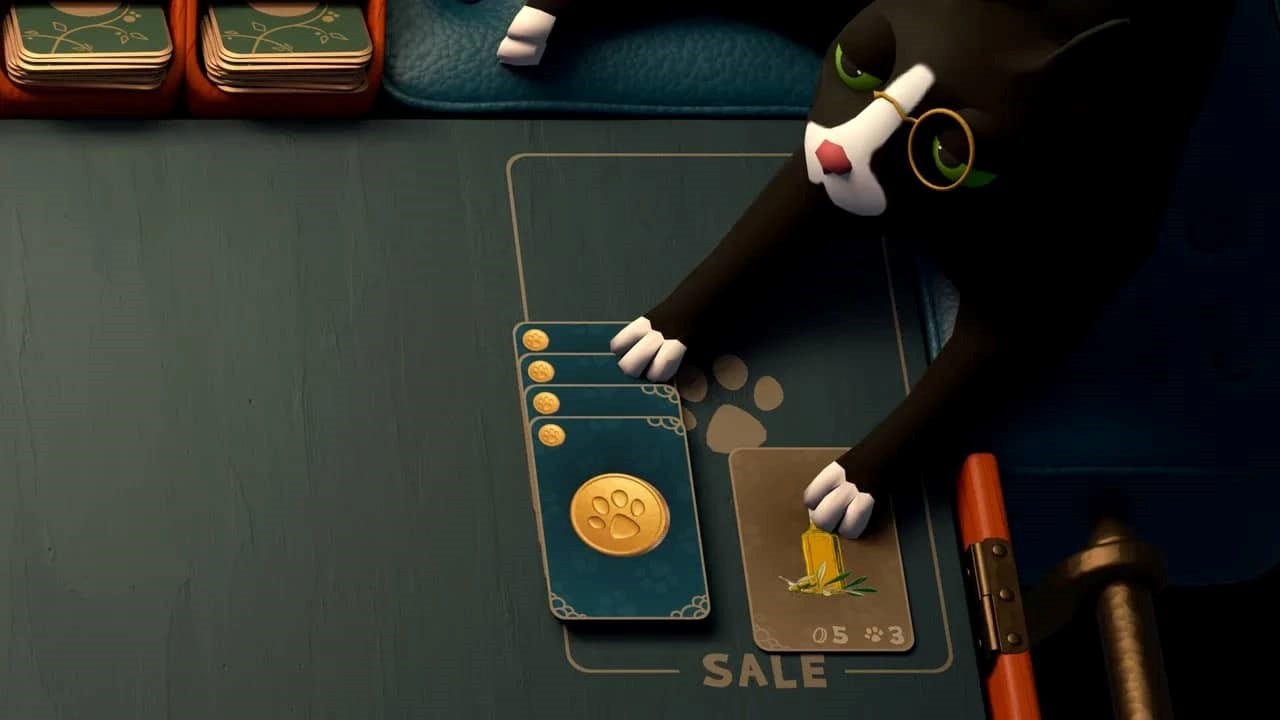
You have access to condiments as well. If you’re missing an ingredient, you can buy a card pack from the required category and hope luck is on your side. The cute cat in the corner will buy any cards you’re not using in case you need more coins to buy packs. Once your ingredients are ready, put them on a plate and serve them to your customer. Pause the game, accept payment, extra cards, and dirty dishes, and reorganize for the next customer. Each customer demands their dish within a specific time window; failing that will result in a failing grade.
Complete a full level, and you will unlock a VIP customer with a special request. This menu item normally uses the rare ingredient cards you earn as payment. Don’t worry, you can’t accidentally sell these cards. Once you complete the level, you have the opportunity to store a few ingredients in the fridge to help you start the next level with more cards.
If you find games like Overcooked stressful, like I do, this will be no different; however, it had its hooks in me, where I couldn’t just stop playing. I wanted to get three stars in every level, even if the cat was never impressed when I did. The graphics are whimsical and bright, the menu items authentically British. I enjoyed seeing some traditional menu items pop up on my screen. There are over 100 recipes to learn, and more than a dozen guest types.
You will also have a chicken that eats cucumbers and will lay eggs. You can do multiple recipes using a variety of methods for the eggs as well. Boiling an egg three times will take you through soft, medium, and hard-boiled eggs, or you can make poached, fried, or even scrambled.
As mentioned in the opening paragraph, I am not a fan of random pack luck, and Abra-Cooking-Dabra was no different. On multiple occasions, I would have to purchase pack after pack, hoping to get an elusive sauce or plant to drop, especially things like oil, which might be needed for multiple recipes for a single customer.
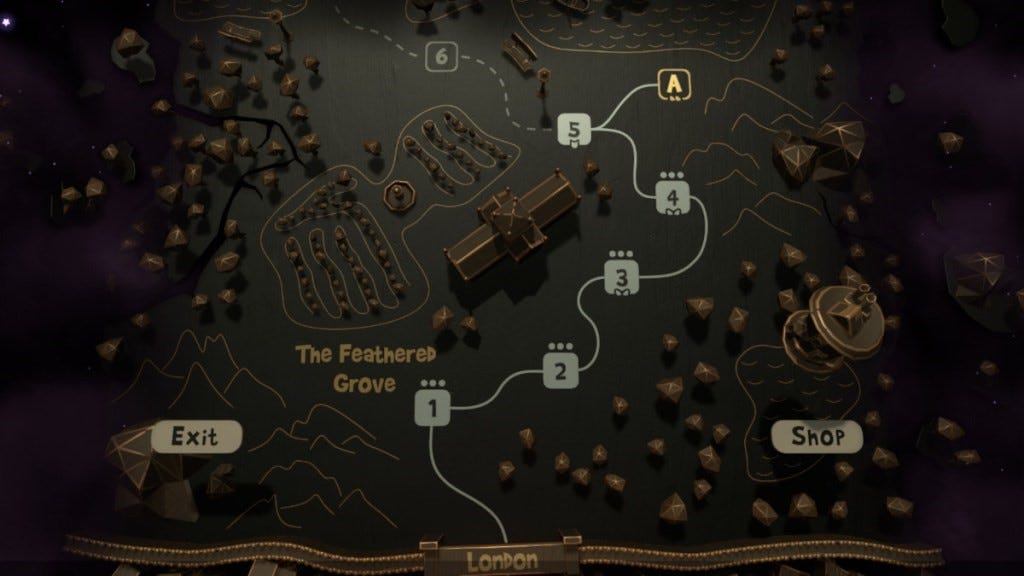
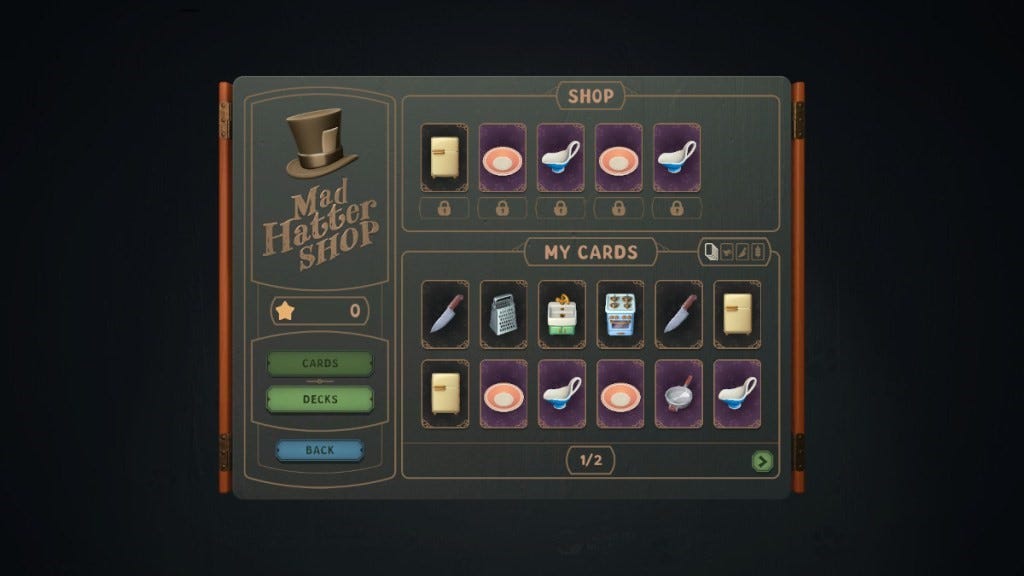
Between levels, you can hop into the Mad Hatters Shop to buy new cards, like an extra stove or knife, or a plate that will make your prep easier.
There are Boss levels scattered throughout the game, and these were even more stressful, with more complex menu items, and some some customers have abilities to freeze or burn some of your cards, meaning even more lost time with cooking.
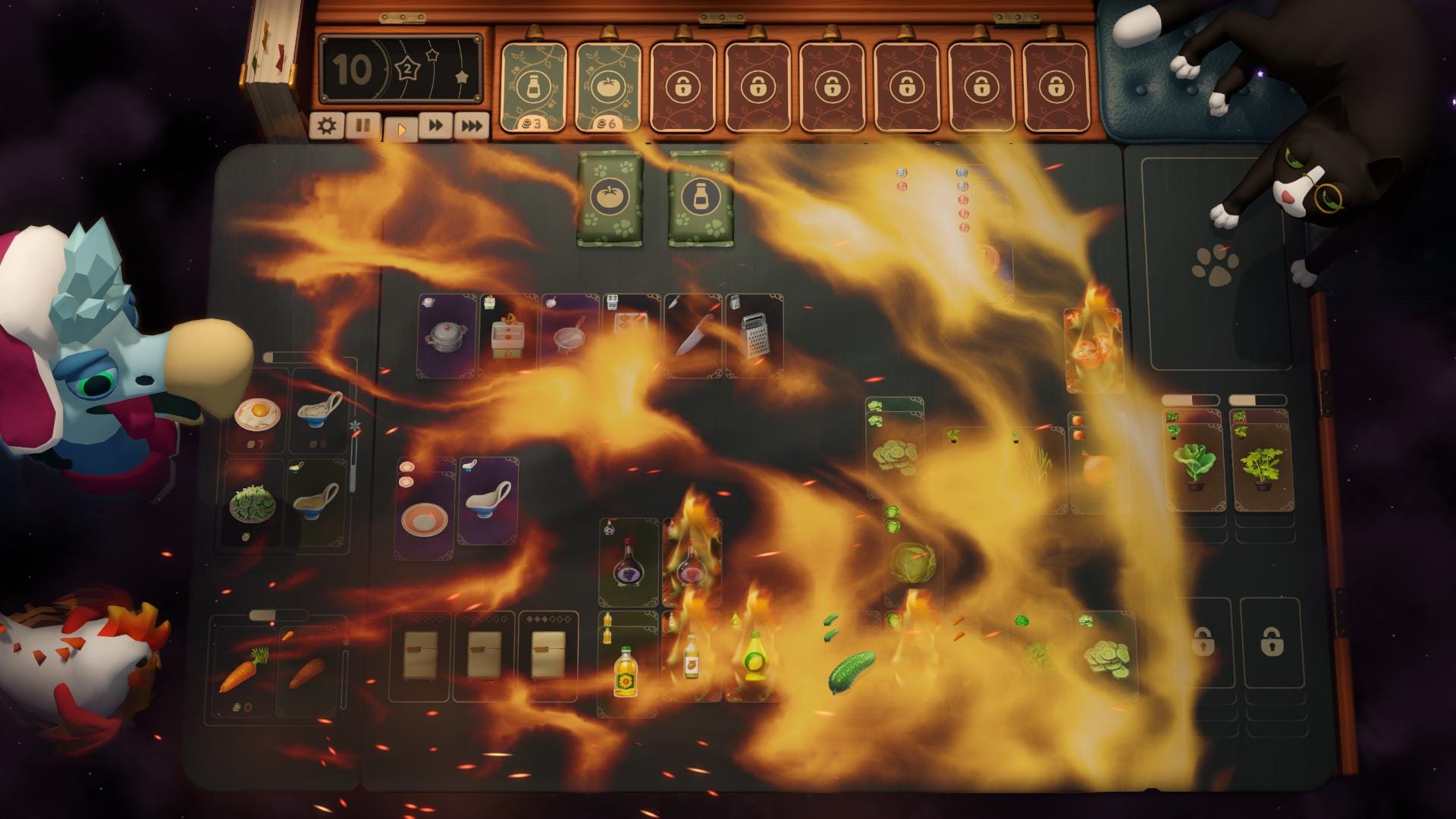
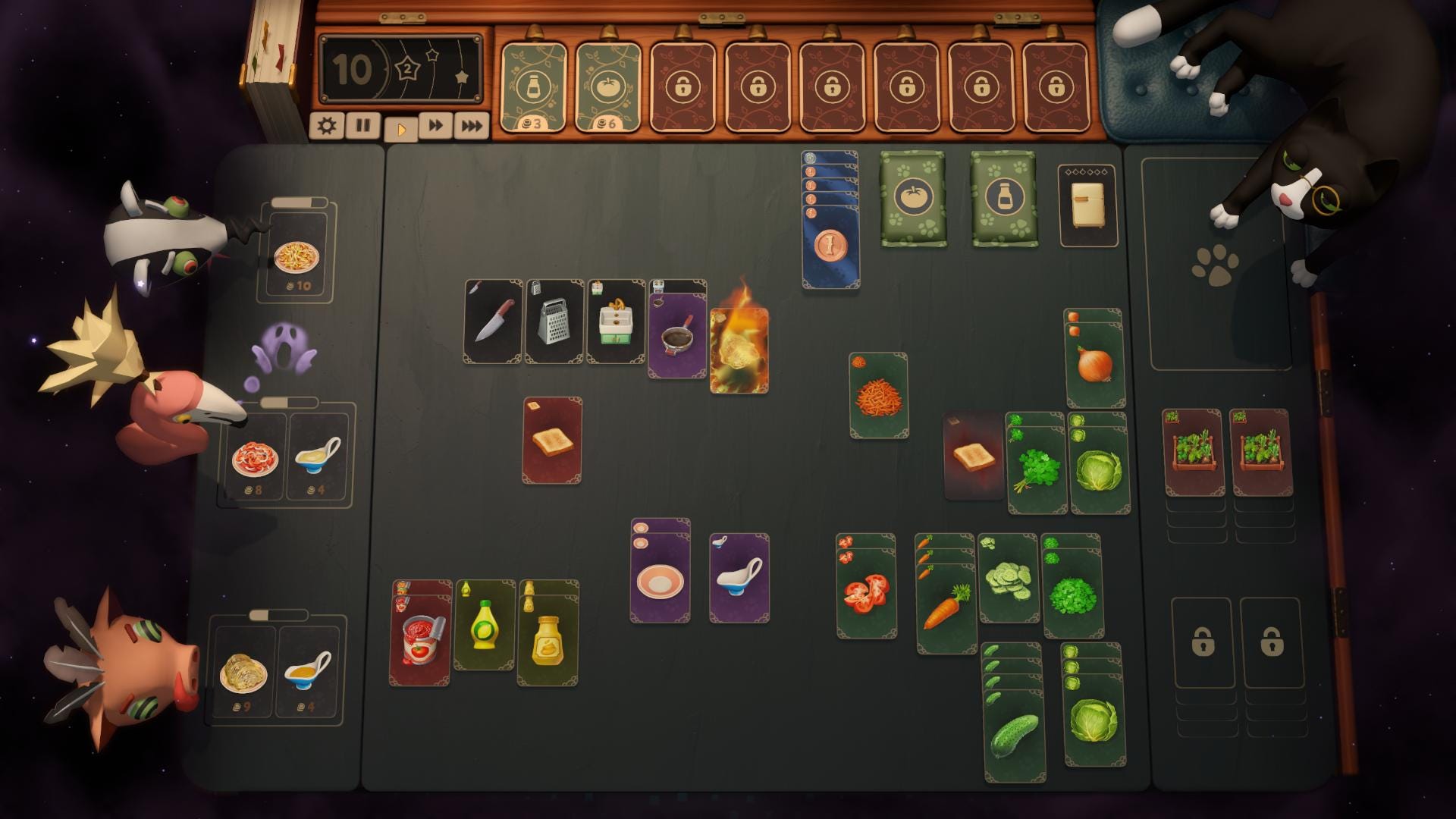
The biggest negative I have is that I think the game needed some more tutorials. The ordered recipe tells you what you need, but you never really learn how to get to the end. It was a little trial and error for me, especially when you had a recipe that had cooked and raw elements mixed together. Which part needed to be cooked, and which didn’t? Some levels will just have a customer who orders ‘sauce’ or ‘salad’ for example, and you need to remember a recipe to fulfill this request.
Overall, Abra-Cooking-Dabra won’t change my mind about deck-building games, but it definitely captivated me into playing for a few hours each time I sat down at the computer. When you get into more complex levels, it can start to get a little repetitive, and if you fail late into a 20-minute level, you start from the beginning, so it does test your patience as well. I think the game is worth checking out. Do you have what it takes to become Wonderland’s next top chef?
**Code graciously supplied from Door 407, via Press Engine and reviewed on PC (Steam)**




 Ophelia Payne
Leave a comment